Carbon Fiber & Materials
Carbon Fiber Sheets Explained: 3K Twill, Thickness and CNC Tips
What 3K twill means, how to choose carbon fiber sheet thickness, and how to cut and drill carbon fiber safely for drones, RC and builds.
· 8 min read
Key takeaways
- '3K' means 3,000 filaments per tow.
- Twill weave is stiffer-looking and drapes better than plain weave.
- 2mm sheets suit drone frames and brackets; 3mm+ for structural plates.
- Always cut wet or with dust extraction — carbon dust is hazardous.
What does 3K twill mean?
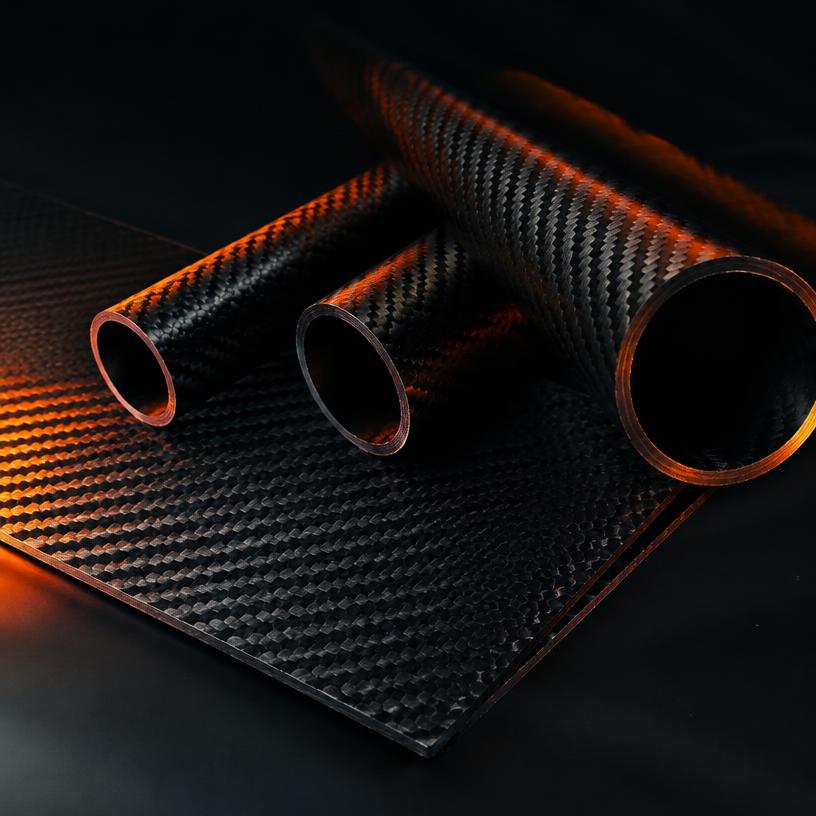
Carbon fiber is made of tows — bundles of filaments. A 3K tow contains 3,000 filaments, the most common size for visible cosmetic and structural laminates.
Twill (2×2) weaves each tow over two and under two, creating the diagonal pattern people associate with premium carbon. It is slightly more flexible to lay up than plain weave and looks deeper under a gloss finish.
Choosing thickness
Thickness drives stiffness far more than any other factor — doubling thickness makes a plate roughly eight times stiffer in bending.
- 0.5–1mm: covers, cosmetic panels
- 1.5–2mm: drone arms, brackets, RC chassis
- 3–5mm: structural plates, CNC jigs
Cutting and drilling carbon fiber
Use carbide or diamond-coated tools, slow feeds and support the sheet on both sides of the cut to avoid delamination. Wet cutting or a vacuum at the cutting point keeps dust under control.
Wear a P2/N95 mask and gloves. Seal cut edges with thin CA glue or epoxy to prevent fraying.
Pro tip: Tape both faces along the cut line with masking tape to get crisp, chip-free edges.
Tubes for frames and booms
Roll-wrapped carbon tubes offer the best stiffness-to-weight ratio for booms, antennas, camera rigs and drone arms. Combining sheet plates with tube arms is the classic lightweight frame design.
Frequently asked questions
Products mentioned in this article
Keep reading

Electronics
Noise-Cancelling Headphones Buying Guide: What Actually Matters
Hybrid ANC, codecs, battery life and multipoint explained — how to pick wireless noise-cancelling headphones without overpaying.
7 min read
Components
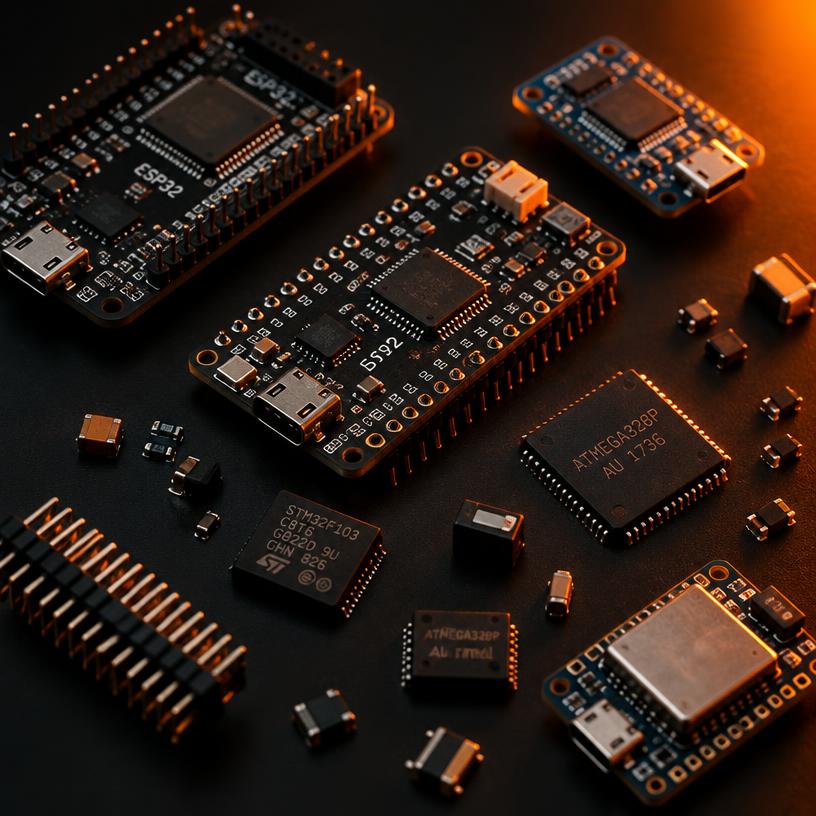
ESP32-S3 vs STM32: Which Microcontroller Should You Use?
A practical comparison of ESP32-S3 and STM32F411 boards for IoT, robotics and maker projects — connectivity, power, tooling and price.
9 min read
Carbon Fiber & Materials
Aerogel Insulation: The Space-Age Material You Can Actually Buy
What silica aerogel is, why it is one of the best thermal insulators on Earth, and practical uses from EV battery packs to workshops.
6 min read